
CCTV survey: $300–$750
Stands alone and is credited against the works by most operators. Without it nobody can price a liner honestly.
We camera the line first, show you what is actually wrong, and then tell you whether relining is the right answer. Often it is. Where the pipe has collapsed or lost its fall, it is not, and we will say so rather than sell you a liner that disappoints.
The failure that brings most people here is not a broken pipe. It is a joint. Older drainage is laid in short lengths, so a single run has a great many joints, and after decades of ground movement and root pressure they open a fraction at a time until something backs up.
A liner seals all of them in one pass, which is why it changes the pattern rather than resetting it. Cutting roots out clears the pipe and leaves the way in exactly as it was, and the interval to the next blockage is set by how fast they grow back.
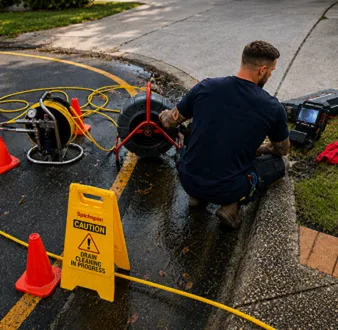
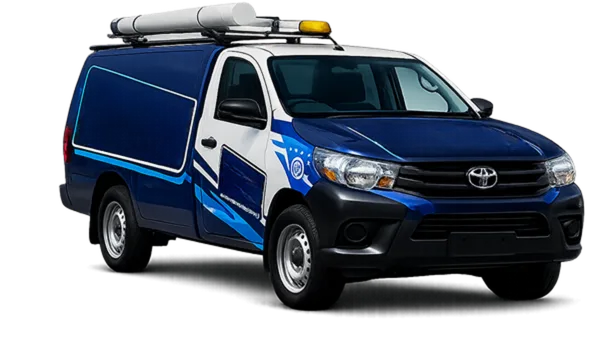
An older house is rarely on one generation of drainage. It is on three or four, joined wherever a bathroom moved or an extension went on, and the transitions between materials are where most faults sit.
A camera run on a property like this is genuinely diagnostic rather than a formality. It is common to find a sound original clay run, a poor 1970s junction, and a modern PVC section all on the same line, each needing a different answer.
Rain sheets down the suburb’s sloping streets toward the Manly Scenic Walkway and North Harbour, hammering stormwater lines that were never sized for it.
Ground near water holds more of it, sits lower and moves more through the seasons than ground further up. Pipework laid decades ago has been flexed by that movement for its whole life, and joints open a fraction at a time rather than failing all at once.
It is why faults here tend to arrive as a slow decline rather than a sudden break, and why a camera often finds a run that is uniformly tired instead of one obvious defect. That pattern suits a full-length liner rather than a patch.
Decades of extensions and landscaping on tight hillside blocks have left many drains crushed, redirected or poorly joined, problems that surface years later as chronic blockages.
Excavating on a slope is a different job from excavating on the flat. Access for a machine is often impossible, the spoil has to go somewhere, trench walls need support, and reinstating a tiered garden or a retaining structure can cost more than the drainage work it was dug for.
Relining sidesteps all of it. The line is repaired from an existing access point, and the surface above stays exactly as it is. On a difficult block the saving is not marginal, it is often the difference between doing the job and deferring it.
Most people associate relining with sewers, but stormwater suffers the same failures and reline just as well: cracked lengths, open joints, roots, and sections that have silted because the fall has flattened. On a property that floods in every serious downpour, the line is often the reason rather than the rain.
The camera run matters more here than anywhere. Clearing a surcharging pit at the height of a storm tells you almost nothing; the same line inspected on a dry day tells you whether you have a blockage or a defect.
A listing does not stop you repairing a drain. What it restricts is change that is visible or that disturbs significant fabric, which is precisely what a trenchless repair avoids.
In practice that makes relining the path of least resistance on a listed or conservation-area property: nothing is removed, nothing changes above ground, and there is no reinstatement to get approved.
Stands alone and is credited against the works by most operators. Without it nobody can price a liner honestly.
The usual Sydney range for domestic sewer. Access and junction reinstatement are normally quoted separately.
One defect in an otherwise sound run. The proportionate answer on stable ground, and the wrong answer on a line with twenty tired joints.
Where the camera shows the same failure repeating along the length. Ends the problem rather than relocating it.
The honest comparison. Cheaper on an open lawn, rarely cheaper under a driveway, paving or a building.
These are market ranges, not our price. Nothing is quoted before the survey, and nothing starts before you agree it. Figures here are indicative of the 2026 Sydney market rather than a quote from us, you get your own number as a fixed price before any work starts.

Nothing is priced until a camera has been down the line. The survey is recorded, distances are marked from a known point, and the footage is yours.
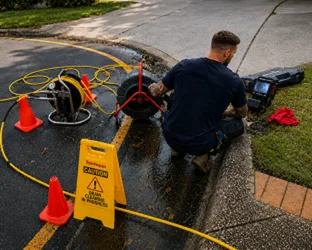
A single defect in a sound run wants a patch. A run failing along its length wants a full liner. A collapsed or sagging section wants excavation. The camera decides, not the quote.
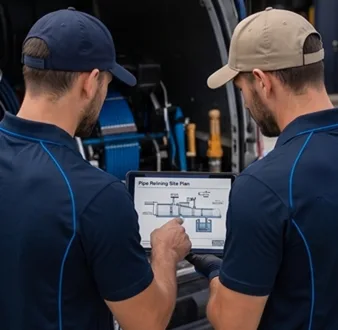
Jet clean, install through the existing opening, cure in place. Water is off for part of the day and nothing above the pipe is disturbed.

Junctions reinstated, final camera run, and the compliance paperwork where the work is notifiable. You keep both recordings.
Describe what the drain is doing and how often. We will tell you whether it sounds structural or whether a clean and a maintenance interval is the honest answer.
Cost, lifespan, method, and the cases where a liner is the wrong answer.

Phone is quickest. The form reaches the crew covering Fairlight, and the first step is always the survey.

Leave your details and our local Fairlight team will call you back fast.